
The fee landscape, briefly
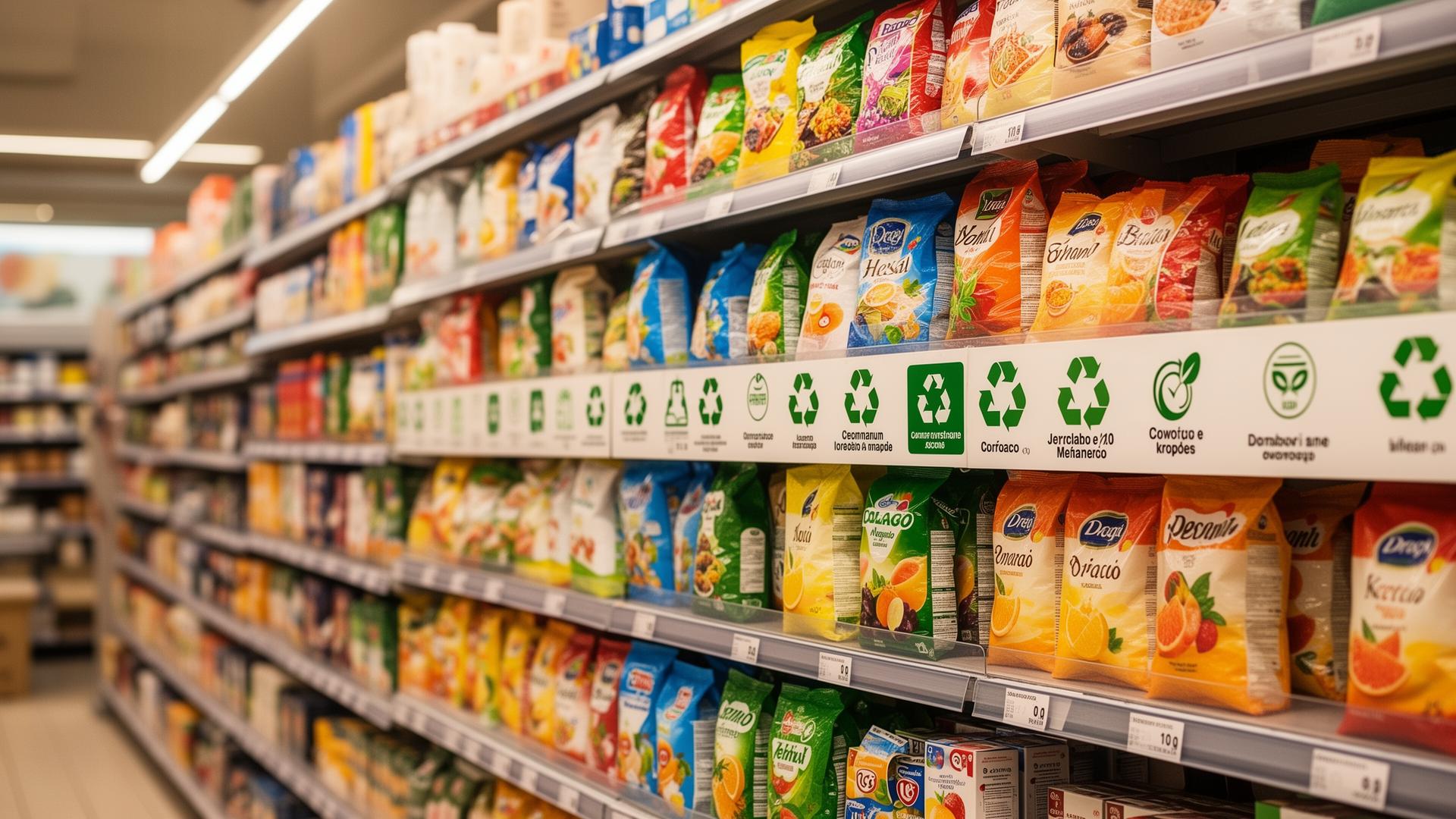
France, Germany, Italy, Spain, the UK, Canada, and a growing list of US states each operate distinct EPR schemes with their own fee schedules, recyclability assessments, and bonus-malus mechanisms. A single SKU sold across Europe can attract ten different fee profiles for the same physical pack.
The fee envelopes are no longer rounding errors. For a mid-sized FMCG portfolio with €500M of European revenue, total EPR exposure is regularly €4–8M annually and growing at double digits as schemes tighten and modulation factors steepen. Treating this as a back-office tax payment misses the strategic point entirely.
Model before you tool
The Packaging Intelligence module ingests a digital pack specification — components, materials, weights, recycled content, recyclability class — and projects fees per market, per pack, per year. Designers see the financial impact of swapping a black PET tray for clear PET, or moving from a multi-material laminate to mono-PE, before tooling is committed.
This shift — from post-launch surprise to pre-launch transparency — is the single most valuable behaviour change packaging teams can make. The cost of a material substitution at concept stage is a design decision; the same substitution after tooling has been ordered is a write-off.

Recyclability as a design input
PPWR's recyclability grades will determine market access by 2030. Treat recyclability as a design input alongside cost and shelf life — not a post-hoc compliance check. The platform flags non-conformant constructions at the concept stage, when changes are cheap.
Recyclability is not a single binary. Different schemes weight different attributes — colour, label adhesive, closure compatibility, sorting infrastructure — differently. A pack that grades A in one market may grade C in another. Modelling this nuance early prevents costly rework when the marketing team has already committed to a launch market mix.
Connect packaging to carbon
Every gram of material has a carbon shadow. When packaging data and carbon data live in the same platform, a 12% lightweighting decision automatically updates Scope 3 Category 1 — no parallel calculation, no reconciliation, no surprise at year end.
The same connection works in reverse. A Scope 3 reduction commitment can be decomposed into specific packaging redesign targets, with the abatement modelled per SKU and rolled up to the portfolio. This turns a top-down emissions target into bottom-up packaging design briefs that R&D and procurement can act on.
Eco-modulation, demystified
Eco-modulation is the mechanism by which producer responsibility organisations adjust base fees up or down based on the environmental performance of each pack. Bonuses reward recycled content, mono-material constructions, recyclability, and reusability; maluses penalise problematic colourants, non-detachable elements, virgin plastics in certain categories, and disruptive components.
The challenge is that modulation rules differ by country, by material stream, and by year. A French malus on opaque PET bottles, a German bonus on certified post-consumer recycled content, an Italian malus on multi-layer flexibles — none of these are visible to a designer working in CAD without a system that models them automatically.
Sophisticated portfolios now treat eco-modulation projections as a standard input to the business case for any new pack. The break-even calculation includes not just unit cost and tooling, but the multi-year fee differential between alternative constructions. Surprisingly often, the apparently more expensive sustainable option is the cheaper option once fees are included.
Building the digital pack specification
Most packaging teams discover that they cannot model fees because they cannot answer basic questions about their own portfolio: how many SKUs are sold per market, what each pack actually weighs, which materials are present in what proportion, which suppliers provide which components. The data lives in PLM, ERP, supplier specs, and the heads of senior buyers — but not in any single place.
Building a digital pack specification — one structured record per pack, with all components, materials, weights, and certifications — is the foundational data exercise. It is unglamorous work, but it is the prerequisite for every other capability: fee modelling, PPWR readiness, Scope 3 packaging carbon, supplier engagement, eco-design briefs.
The platform makes this build incremental. Start with the top 80% of volume, ingest from existing PLM where possible, and use supplier portals to fill the gaps. Within two cycles, the digital specification is the source of truth that everyone — design, procurement, sustainability, finance — works from.
Forecasting the fee trajectory
Today's fee schedule is not next year's. Schemes routinely re-base, modulation factors steepen, and new categories enter scope. A credible business case for redesign considers not just current fees but the projected trajectory under conservative, base, and aggressive policy scenarios.
The platform maintains a rolling view of announced and likely changes across all major schemes, so finance and sustainability can plan with shared assumptions. When a regulatory shift is announced — a new French malus, a Spanish recycled content threshold — the impact on the portfolio's fee bill is visible within hours, not weeks.
Margin defence, brand offence
The framing matters. EPR fee modelling is often introduced as a defensive exercise — protecting margin against an inflating regulatory cost. That framing is correct but incomplete.
The same modelling, run with intent, also identifies design decisions that simultaneously cut fees, reduce carbon, simplify recycling, and produce a better consumer story. Brands that make those moves first capture both the margin and the marketing benefit. Brands that wait pay the fees and watch competitors take the narrative.
Cross-functional ownership of the fee bill
EPR fees fall awkwardly between functions. Finance owns the cost line but has no influence on what drives it. Packaging design influences the drivers but rarely sees the cost. Regulatory monitors the schemes but is not in the design loop. Procurement negotiates with material suppliers without visibility on downstream fee implications.
The result, in many organisations, is that no one owns the fee outcome. Fees grow, redesigns happen on aesthetic or commercial grounds rather than fee logic, and the connection between design choices and the bottom line is invisible. A simple fix — quarterly cross-functional reviews of fee performance, with shared metrics and shared accountability — transforms the dynamic.
The platform supports this by exposing the fee bill in the same view across all four functions. Finance sees the cost trajectory. Packaging sees the per-pack drivers. Procurement sees the material-level levers. Regulatory sees the scheme-level changes. Shared visibility produces shared accountability.
The data exchange with suppliers
Accurate fee modelling depends on accurate component data: weights, materials, recycled content percentages, certifications. Most of this data lives with packaging suppliers, not within the brand owner. A robust supplier data exchange — templated, validated, periodically refreshed — is the foundation that everything else sits on.
Suppliers respond to data requests when there is mutual benefit. A brand owner who can show suppliers that better data leads to faster qualification, preferred status in tenders, and shared upside on fee reductions creates a partnership rather than a compliance burden. Suppliers who provide weak data should see that reflected in commercial outcomes.
Standardisation matters here too. Industry-aligned templates (CEFLEX for flexibles, RecyClass for plastic packaging, sector-specific working groups) reduce the per-customer effort suppliers face and accelerate adoption. The platform supports the major standards out of the box so that suppliers do not face yet another bespoke format.
Beyond Europe: the global EPR map
EPR is no longer a European story. Canadian provinces, Indian states, Chilean regulations, Australian schemes, and a growing list of US states (Oregon, California, Colorado, Maine, Minnesota, Washington) are operationalising producer responsibility with their own twists on the European playbook.
Multinational portfolios need a global view that handles regional schemes consistently while respecting their differences. A patchwork of regional spreadsheets becomes unmanageable beyond a handful of jurisdictions; a single platform that abstracts the common pattern and parameterises the local rules scales gracefully as the map expands.
The platform's regulatory content is maintained centrally and updated as schemes evolve, so the brand team does not have to monitor every state-level rulemaking. New jurisdictions appear as configuration, not as a development project, which is what enables speed of expansion without speed of regulatory complexity overwhelming the team.
From fee management to circular advantage
EPR fees, viewed narrowly, are a cost to minimise. Viewed strategically, they are a price signal pointing toward circular packaging models that will be commercially advantageous regardless of the regulatory regime.
Companies that respond only to current fees miss the larger shift. Those that use fee modelling as one input into a broader circular packaging strategy — embracing reuse where it works, designing for recyclability across all formats, securing recycled feedstock supply early — position themselves for both lower fees and stronger consumer and customer relationships.
The platform supports this strategic framing by integrating fee modelling with carbon accounting, recyclability scoring, and consumer perception data. Decisions are made with the full picture, not just the next invoice from a producer responsibility organisation.
The leaders in five years will be those who treated EPR not as a cost line to defend but as a forcing function to build a packaging system that is fundamentally better — more circular, lower carbon, lower cost over the full cycle, and more resilient to regulatory change. The companies still arguing about fees in 2030 will be the laggards.
Deeper dives on adjacent topics
We curate independent perspectives that complement this article. The links below point to detailed analyses on packgine.ai — a sister source for packaging compliance, EPR, PPWR, and circularity.